July 7, 2026
Building a can plant typically requires a first line capable of producing at least 600 million cans a year to be commercially viable — and the real complexity isn’t the machinery; it’s coordinating the more than 1,000 individual engineering, permitting, and commissioning responsibilities that determine whether a plant opens on schedule. Here’s what that process actually involves, from planning through to the first commercial run, based on lessons from plants that Roeslein has built across four continents.
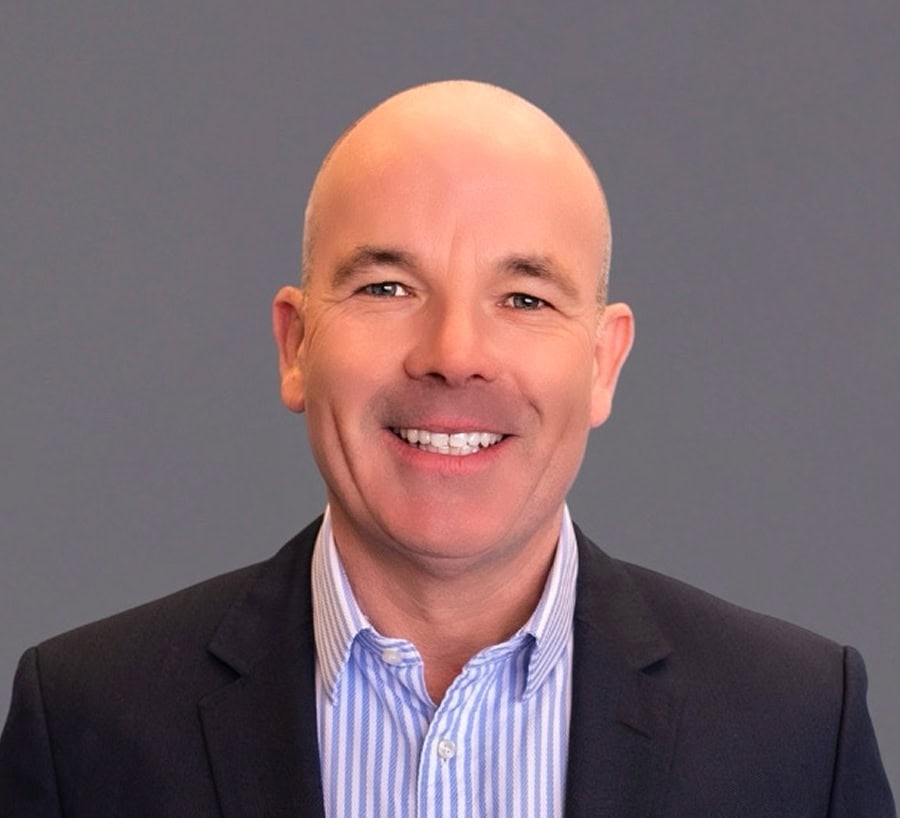
Roeslein & Associates has built its recognition as a leader in aluminium can plant design and engineering – delivering turnkey greenfield facilities across global markets. Jason Ramskill, President of Global Can Manufacturing, has spent his career inside the metal packaging business. Here, he shares what it really takes to build a facility that stays competitive for decades, and why the most important decisions happen long before construction begins.
In an industry where margins are measured in fractions of a cent per can, seemingly small details can have major consequences. A few extra grams of aluminium, an inefficient conveyor layout or unnecessary downtime can cost millions of dollars over the lifetime of a facility. It’s why experienced engineers often say that in can manufacturing, microns matter and seconds count.
It starts long before construction
The biggest misconception about building a can plant is that the project begins when construction crews arrive on site. In reality, the most important decisions are made months earlier.
The first question isn’t “How big should the building be”? it’s “Where should it be located, and who will it serve”?
Every successful facility is designed around an economic radius that carefully balances production costs with transportation expenses. Vicinity to major filling operations, transportation infrastructure and reliable utility networks regularly determines whether a plant will remain competitive over the next 20 or 30 years. Just as important is resisting the temptation to design solely around an initial capital budget.
Many first-time investors begin with a fixed spending limit and attempt to engineer the plant to fit. While this approach may reduce upfront costs, it often creates operational compromises that become expensive limitations later. Conveyor clearances become too tight. Equipment footprints leave little room for expansion. Utility systems are sized only for today’s production requirements rather than tomorrow’s opportunities.
The result is a facility that performs adequately on day one but struggles to adapt as market requirements evolve. Today’s beverage market looks very different from what it was a decade ago. Production is no longer focused on one standard can format. Manufacturers increasingly need the flexibility to produce slim, sleek and standard profiles while supporting multiple beverage categories. Designing that flexibility into the plant from the outset is considerably more cost-effective than retrofitting it years later.
Futureproofing isn’t about overspending – it’s about making informed engineering decisions that protect long-term value.
Every fraction of a cent counts
Once production begins, every aspect of a can plant is measured against a single benchmark: dollars per thousand cans ($/000).
Everything influences this number. Raw material consumption. Electricity usage. Downtime. Labour efficiency. Maintenance. Even a few seconds lost during changeovers can have a measurable impact on annual profitability. That’s why high-performing facilities are obsessed with operational efficiency in terms of plant design.
Thoughtfully engineered layouts reduce unnecessary movement, improve operator visibility, and simplify maintenance activities. Rather than simply reducing headcount, smart design enables people and equipment to work together more efficiently while improving safety and reliability.
Behind the scenes, successful plants continually monitor a network of key performance indicators—including safety performance, spoilage, energy consumption, material consumption and customer quality claims. These metrics aren’t viewed independently. Together, they provide a complete picture of how effectively the facility is performing and where incremental improvements can produce considerable value. Roeslein’s own R.U.D.I. AI platform, for example, gives operators real-time visibility into spoilage trends that were previously impossible to track.
Building for growth, not just start-up
Constructing a can plant needs considerable upfront investment, but not every stage of growth carries the same financial burden.
The first production line is by far the most expensive because it absorbs the cost of the building, utilities, infrastructure, site development and supporting services. At this stage, margins can be relatively tight as the facility shoulders the weight of its entire fixed-cost base.
Therefore, many successful manufacturers adopt a staged growth strategy. Rather than building maximum capacity immediately, they establish a solid operational foundation before expanding production as customer demand grows.
An initial line producing approximately 600 million cans annually creates the platform for future expansion. As additional production lines are introduced, they leverage the existing building, utilities and infrastructure, requiring proportionally less capital investment while significantly improving fixed-cost absorption. The result is stronger profitability, improved productivity, and a faster return on invested capital.
Growth becomes more predictable because the facility has been engineered from the very beginning to accommodate expansion.
However, a world-class plant layout is only as effective as the team running it. At its core, successful manufacturing relies on a simple truth: its people. The transition from a newly commissioned facility to an asset requires intense specialised training and knowledge. This human resource gap is where many standalone projects fail. Using a global network of 1,400 industry professionals, Roeslein can deploy dedicated integration teams directly to a client’s facility. These teams don’t just manage start-up support, they introduce stringent technical protocols, conduct operational audits, and provide intensive on-site training to quickly bridge the learning curve.
Turning complexity into a managed process
Building a can plant involves thousands of individual decisions and multiple specialist contractors. Without clear accountability, even relatively minor coordination issues can create costly delays. That’s why experienced engineering partners rely on structured, turnkey project delivery.
Rather than treating engineering, procurement, construction, and commissioning as separate activities, they are managed as an integrated programme – from preliminary engineering through detailed design, fabrication, installation, start-up, and ongoing lifecycle support.
This approach provides responsibility throughout the project, reducing risk while improving communication among all stakeholders.
One of the most effective tools supporting this process is the RACI matrix, which clearly defines who is Responsible, Accountable, Consulted and Informed for every activity. On a project of this scale, that can mean tracking well over 1,000 individual responsibilities – from major civil works to highly specific process piping, lubrication systems and electrical installations.
While much of this planning happens behind the scenes, it’s one of the biggest reasons successful projects stay on schedule and within budget. Every responsibility is clearly defined before work begins, dramatically reducing uncertainty during construction. Crucially, this requires more than local project management; it requires an infrastructure built for global resilience. Roeslein takes advantage of a vertically integrated manufacturing footprint spanning major facilities in the United States, Europe (Poland), South America (Brazil), and Asia (China). By fabricating proprietary modular units across this network, the company shields its clients from local localised supply chain interruptions, balances capacity demands, and mitigates cross-border currency pressures.
Rethinking the construction timeline
Traditionally, industrial facilities have been built in sequence. The site is prepared. The building is erected. Utilities are installed. Equipment is delivered. Finally, commissioning begins. While logical, this linear approach leaves valuable time on the table and exposes projects to delays caused by weather, labour availability and supply chain interruptions.
Today’s leading projects increasingly take a different approach. Using modular engineering and off-site fabrication, major process systems can be built, piped, wired and tested in controlled manufacturing facilities while construction progresses simultaneously on site. Instead of waiting for one phase to finish before the next can begin, multiple workstreams advance in parallel. The benefits go far beyond speed.
Factory-controlled fabrication delivers higher levels of consistency, precision and quality that can’t typically be achieved in field conditions. Advanced laser cutting, automated fabrication technologies and robotic pipe processing enable tighter tolerances while reducing rework during installation. Perhaps most importantly, bad weather at the construction site no longer brings the entire project to a halt. While foundations are being poured and structural steel is erected, integration teams can continue building complete process modules in parallel.
Once the building reaches a weather-tight condition, these fully assembled modules are delivered, positioned and connected, dramatically accelerating commissioning. With the right planning and execution strategy, it’s possible to move from breaking ground to producing the first commercial pallet of cans and save up to two months time compared to a traditional build-on-site solution – a remarkable achievement for a project of this scale.
Built to stand alone
Modular construction brings another advantage that’s easy to overlook: independence from the building itself. Older can plant designs were often built around the structure, with process equipment hung from supported roof sections — meaning the facility and the building were effectively locked together from day one. Roeslein’s modular units are engineered to stand independently of the building’s fabric, which means the same approach used for a new greenfield facility can also be deployed inside an existing brownfield site. For investors weighing land options, that flexibility can open up sites that would otherwise be ruled out, without compromising on build quality or speed.
That same engineering discipline extends to how the cans themselves move through the plant. As sustainability pressure pushes manufacturers toward lighter aluminium, handling these more fragile cans at high speed becomes its own specialism — one Roeslein has built a particular reputation for, particularly around the equipment feeding cans into printers at speed.
The difference between building a plant and establishing a competitive business
Building a can plant is about far more than constructing a manufacturing facility. It’s about creating a business that can remain competitive for decades in an increasingly demanding market.
If there’s one piece of advice to keep coming back to it’s this – go in with your eyes wide open, and don’t let yourself shortcut the early phases. It’s important to really understand what it takes before they start — phase one, preliminary engineering. It’s an invaluable step. Most customers do it properly. Some try to skip around it, and they end up wasting far more time and money than they ever saved. A high-quality preliminary engineering phase — one that gives you a clear commercial picture alongside a detailed technical specification — isn’t a delay before the real work starts – it’s the real work. Get that right with the right consultant and the right experience behind them, it’s the single investment most likely to determine whether your plant performs for 12 months or for 40 years.
Because in the end, the old saying still holds true: microns matter and seconds count.
##
FAQ:
How big does a can plant’s first production line need to be?
A first line typically needs to produce at least 600 million cans a year to be commercially viable, since that scale creates the foundation for future expansion without requiring a whole new building or infrastructure.
What is $/000 in can manufacturing?
It’s the core benchmark used to measure plant performance — dollars per thousand cans — against which everything from raw material use to downtime and labour efficiency is tracked.
What is a RACI matrix and why does it matter in plant construction?
A RACI matrix defines who is Responsible, Accountable, Consulted and Informed for every task on a project. On a can plant build, that can mean tracking more than 1,000 individual responsibilities, which is one of the main reasons well-run projects stay on schedule and budget.
Can modular construction speed up building a can plant?
Yes. Building and testing process modules off-site while site construction happens in parallel can save up to two months compared with a traditional build-on-site approach.
Can modular can plant equipment be used in an existing building, not just a new one?
Yes. Because Roeslein’s modular units are engineered to stand independently of the building structure, the same approach used for a new greenfield facility can also be deployed inside an existing brownfield site.
Editor notes:
Jason Ramskill is available for interview. To arrange an interview or for more information about Roeslein & Associates, contact:
Jason Ramskill, President, Global Can Manufacturing. [email protected]
About Jason Ramskill:
Jason Ramskill is President of Global Can Manufacturing. He has more than 25 years of experience across operational and engineering roles at two of the largest multinational canmakers in the D&I Industry. Most recently, he served as Senior Vice President of Global Engineering and Operations at Ball Corporation, where he oversaw operations across a global plant network and executed a multi-billion-dollar global capital expansion.
About Roeslein & Associates
Roeslein & Associates was founded in 1990 and is a turnkey solution provider with more than 36 years of industry-leading experience, starting in the Can Making sector and expanding its footprint through the Renewable Energy and Traditional Energy markets. With more than $500 million in annual revenue, Roeslein is well positioned to deliver a prefabricated, preassembled project approach across any industry. Its 1,400+ employees are spread across North America, South America, Europe, and Asia. To find out more, please visit www.roeslein.com.
