September 17, 2026
Roeslein supplies spare parts and aftermarket support to beverage can manufacturing plants worldwide, led by Director of Supply Chain and Global Parts Jason Hoelscher. The business runs an online parts store with live inventory, 3D interactive part models and regional stocking hubs in the US, Brazil and Poland, holding around $800,000 in parts inventory. Roeslein is exploring consignment stocking and cross-OEM parts consolidation to cut plant downtime, which Hoelscher identifies as the biggest cost risk facing can plant operators.
Roeslein provides spare parts and aftermarket support for beverage can manufacturing plants worldwide through an online parts store with live inventory, 3D interactive part models, and regional stocking hubs in the US, Brazil, and Poland.
The company, led on this side of the business by Director of Supply Chain and Global Parts Jason Hoelscher, holds around $800,000 in parts inventory and is exploring consignment stocking and cross-OEM parts consolidation to help cut plant downtime and streamline plant procurement efforts.
When asked what it takes to build a can plant, the answer was design, engineering and commissioning, backed by nearly 4,000 successful projects worldwide and support across every major equipment centre, from bodymakers to decorators to cuppers. A plant doesn’t stop needing Roeslein once it’s up and running, though. If anything, that’s when the relationship really starts.
For Jason Hoelscher, Roeslein’s Director of Supply Chain and Global Parts, that’s the whole point of the business he’s built since joining the company. “Historically, Roeslein had just been, here’s the project, we do the project, now we move on and let’s wait for the next one,” he says. That’s changed. Today, spare parts and aftermarket support sit alongside the original build as a core part of what Roeslein offers.
From spares packages to a global storefront
Hoelscher joined Roeslein in January 2019 from Intelligrated, where he’d worked in aftermarket parts for the material handling industry, supplying companies like Coca-Cola and Anheuser-Busch. Roeslein recruited him to start an aftermarket division, then asked him to build a dedicated parts group from scratch.
The starting point was simple: when Roeslein completed a new build, whether it was Roeslein’s own equipment or product sourced from other OEMs, it began consolidating the recommended spares for every piece of equipment into a single package. Working with the customer, the team identified what should sit on the shelf from day one, covering critical items and parts prone to early failure that could derail a plant in its first year of operation.
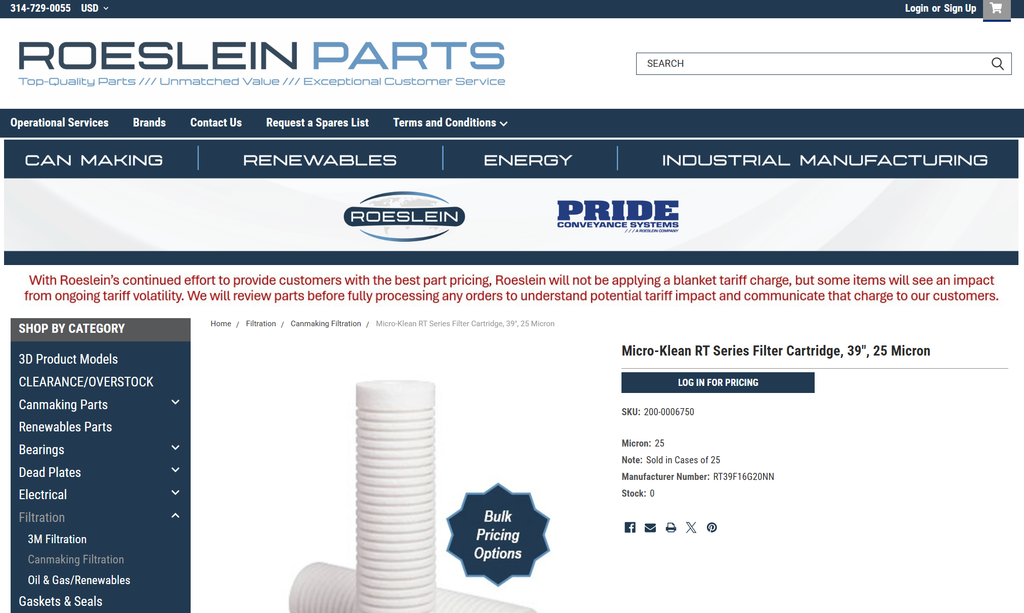
From there, the offering grew. “We just started adding on the email piece, the phone piece, just call us, what do you need, send us pictures, we’ll go track it down for you,” Hoelscher explains. That eventually became Roeslein’s online parts store, built around consolidation.
“Our whole thought behind the store was we want to do that Amazon model, where we could consolidate as much as we can into that storefront so customers can go there and find parts for numerous pieces of equipment or just the general day-to-day commodities.”
That model is extending beyond Roeslein’s own product line. The company is in conversations with other OEMs about listing their parts through the same storefront, with Roeslein acting as intermediary which helps consolidate customer procurement efforts and take advantage of Roeslein’s buying power.
A genuinely global operation
Roeslein currently stocks parts primarily out of Redbud and Hollister in the US, with a Brazil storefront launching in the coming weeks and Dębno, Poland, also set to run its own regional sales. The long-term plan mirrors how Roeslein has already built out its manufacturing footprint: every facility eventually holding its own stock, tailored to what its region needs.
That global reach also benefits smaller OEMs who supply the industry but lack the infrastructure to distribute internationally. “We can get some of the smaller OEMs that provide equipment to the industry, we can get their parts into other regions easier than they can,” Hoelscher says, whether that’s helping a European manufacturer reach the US, or a US company get product into Europe and South America, without either having to invest in their own footprint locally.
Solving the knowledge problem with 3D models
One of the storefront’s more distinctive features is its 3D modelling capability. Customers can select a piece of equipment, load an interactive model, and spin, zoom and click through to identify the exact part they need before ordering it. It’s a direct response to a problem Hoelscher sees across the industry: as experienced staff retire or move on; the institutional knowledge of exactly which part is which goes with them.
“As the industry loses more knowledge and brings in new people, parts identification has also been a pain point for a lot of customers,” he says. The same tool is now being offered to OEMs, who can supply their own CAD files for Roeslein to build out and tag within the store.
Supply chains under pressure
Ask Hoelscher what’s changed most in the last few years and the answer starts with volatility. Since the pandemic, lead times have swung unpredictably, and demand from an unexpected direction has made things worse. “We’re having a big issue with data centres,” he says. “Data centres are just soaking up all of the electricals, and then piping, fittings, things that you would never think of that are just getting eaten up by data centre jobs that we also use in Drawn & Ironed (D&I) lines.”
Pricing has been just as unpredictable. Carbide, used heavily in tooling, is currently one of the sharpest pain points. “That pricing is being held for less than a week now,” Hoelscher says. “You get a quote, then go negotiate with a customer on something, and then come back, and prices have now changed this week. It’s gone up 40 per cent.” With supply largely controlled out of China, he doesn’t expect that to ease soon. Electrical components, particularly large VFDs and UPS units, are shaping up to be the next major bottleneck, again squeezed by data centre demand.
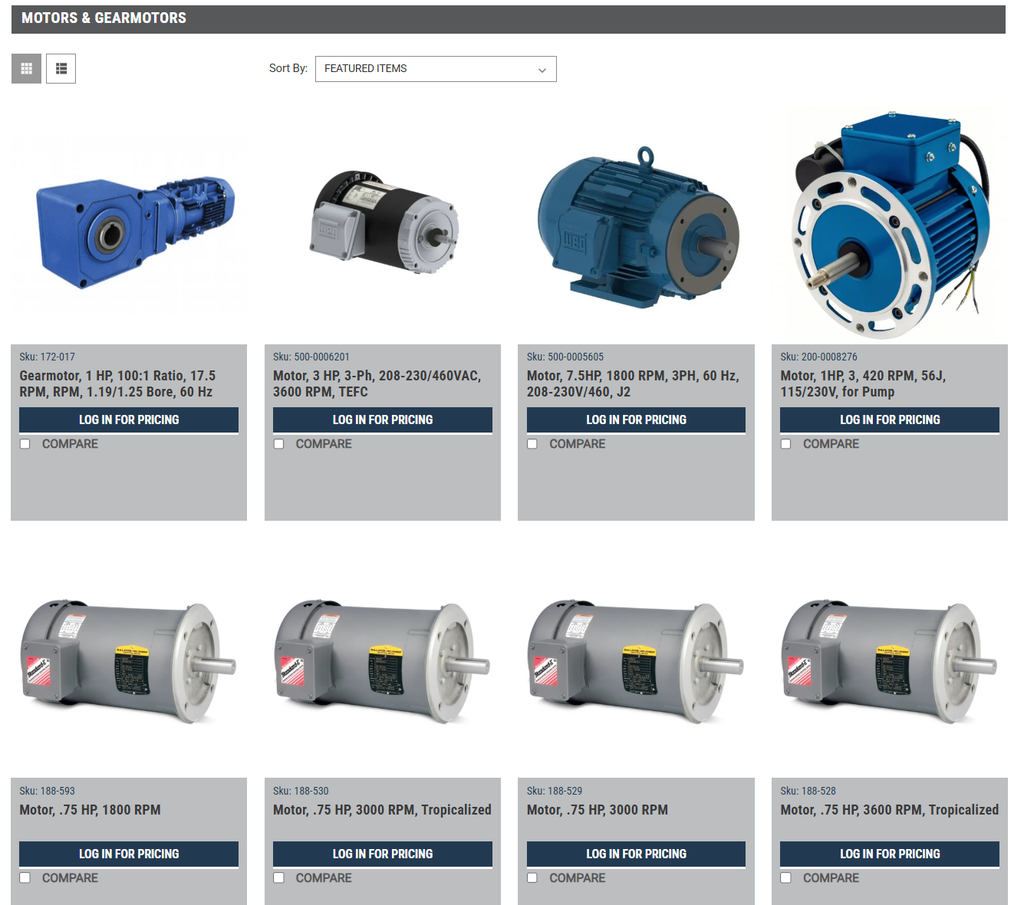
At the same time, customers want the opposite of what volatility encourages. “They all want less on their shelf right now, but they also still want to be able to get it as quickly as they can,” Hoelscher says. Roeslein’s response has been to explore consignment-style arrangements, stocking parts on a customer’s behalf against a usage commitment, so inventory sits with Roeslein rather than tying up a customer’s own shelf space.
The bottom line: downtime
For anyone weighing up what matters in the spare parts side of the industry, Hoelscher’s answer is unambiguous. “It really comes down to downtime,” he says. “These plants are running so fast now, and they must produce so much. If you don’t have a good plan for what you keep in your inventory, or who you’re partnered with to supply spare parts, and you find yourself not making cans for a day or two, or potentially more, that could kill your year.”
Roeslein’s inventory program is reviewed monthly against sales and turnover, to keep pace with what’s moving fastest. For OEM equipment, the team leans on its own field service engineers, many of whom came up through OEMs themselves, to sense-check supplier spares lists against what fails in the field.
Hoelscher keeps the message simple. “If you’ve got an issue, or if you’re looking for something, send it our way. If we can help, we will. If not, we’ll point you in the right direction.”
ENDS
To browse parts, check live stock or explore the 3D models, visit parts.roeslein.com, or contact the team directly at [email protected].
This is the second in Roeslein’s “So You Want to Build a Can Plant?” series. Read the first instalment on the full plant build at roeslein.com/news
FAQs
How much does Roeslein hold in spare parts inventory?
Around $800,000, reviewed monthly against sales and turnover to keep pace with what’s moving fastest.
Where does Roeslein stock spare parts?
Primarily out of Redbud and Hollister in the US, with a Brazil storefront launching soon and a Dębno, Poland hub also set to run its own regional sales.
What’s driving supply chain pressure for can plants right now?
Data centre demand is soaking up electricals, piping and fittings that can plants also rely on, while carbide pricing (used heavily in tooling) has been moving as much as 40% in a week. Large VFDs and UPS units are shaping up to be the next bottleneck.
Who leads Roeslein’s spare parts and aftermarket business?
Jason Hoelscher, Roeslein’s Director of Supply Chain and Global Parts, who joined the company in January 2019 and built the parts group from scratch.
What is Roeslein doing to help customers manage inventory risk?
Exploring consignment-style stocking, where Roeslein holds inventory on a customer’s behalf against a usage commitment, so stock doesn’t have to sit on the customer’s own shelf.
