So you want to build a can plant? Here’s what it really takes.

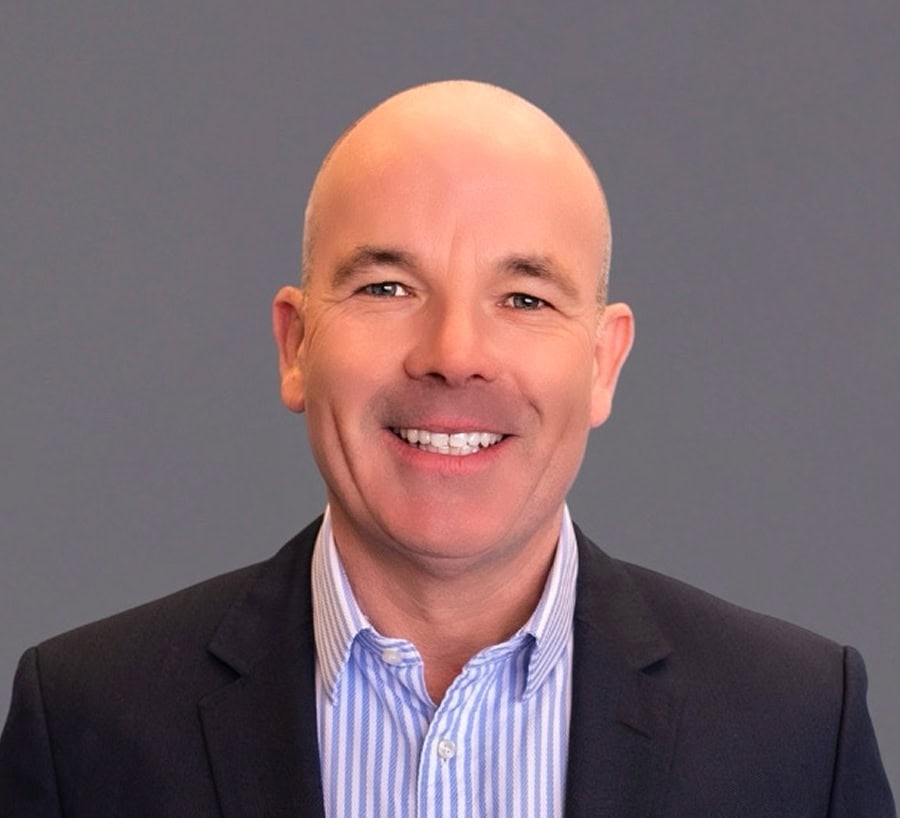
A profile photo of Jason Ramskill, President of Global Manufacturing for Roeslein & Associates.

Building a can plant typically requires a first line capable of producing at least 600 million cans a year to be commercially viable — and the real complexity isn’t the machinery; it’s coordinating the more than 1,000 individual engineering, permitting, and commissioning responsibilities that determine whether a plant opens on schedule. Here’s what that process actually involves, from planning through to the first commercial run, based on lessons from plants that Roeslein has built across four continents.

Roeslein & Associates has built its recognition as a leader in aluminium can plant design and engineering – delivering turnkey greenfield facilities across global markets. Jason Ramskill, President of Global Can Manufacturing, has spent his career inside the metal packaging business. Here, he shares what it really takes to build a facility that stays competitive for decades, and why the most important decisions happen long before construction begins.

In an industry where margins are measured in fractions of a cent per can, seemingly small details can have major consequences. A few extra grams of aluminium, an inefficient conveyor layout or unnecessary downtime can cost millions of dollars over the lifetime of a facility. It’s why experienced engineers often say that in can manufacturing, microns matter and seconds count.

It starts long before construction

The biggest misconception about building a can plant is that the project begins when construction crews arrive on site. In reality, the most important decisions are made months earlier.

The first question isn’t “How big should the building be”? it’s “Where should it be located, and who will it serve”?

Every successful facility is designed around an economic radius that carefully balances production costs with transportation expenses. Vicinity to major filling operations, transportation infrastructure and reliable utility networks regularly determines whether a plant will remain competitive over the next 20 or 30 years. Just as important is resisting the temptation to design solely around an initial capital budget.

Many first-time investors begin with a fixed spending limit and attempt to engineer the plant to fit. While this approach may reduce upfront costs, it often creates operational compromises that become expensive limitations later. Conveyor clearances become too tight. Equipment footprints leave little room for expansion. Utility systems are sized only for today’s production requirements rather than tomorrow’s opportunities.

The result is a facility that performs adequately on day one but struggles to adapt as market requirements evolve. Today’s beverage market looks very different from what it was a decade ago. Production is no longer focused on one standard can format. Manufacturers increasingly need the flexibility to produce slim, sleek and standard profiles while supporting multiple beverage categories. Designing that flexibility into the plant from the outset is considerably more cost-effective than retrofitting it years later.

Futureproofing isn’t about overspending – it’s about making informed engineering decisions that protect long-term value.

Every fraction of a cent counts

Once production begins, every aspect of a can plant is measured against a single benchmark: dollars per thousand cans ($/000).

Everything influences this number. Raw material consumption. Electricity usage. Downtime. Labour efficiency. Maintenance. Even a few seconds lost during changeovers can have a measurable impact on annual profitability. That’s why high-performing facilities are obsessed with operational efficiency in terms of plant design.

Thoughtfully engineered layouts reduce unnecessary movement, improve operator visibility, and simplify maintenance activities. Rather than simply reducing headcount, smart design enables people and equipment to work together more efficiently while improving safety and reliability.

Behind the scenes, successful plants continually monitor a network of key performance indicators-including safety performance, spoilage, energy consumption, material consumption and customer quality claims. These metrics aren’t viewed independently. Together, they provide a complete picture of how effectively the facility is performing and where incremental improvements can produce considerable value.

Building for growth, not just start-up

Constructing a can plant needs considerable upfront investment, but not every stage of growth carries the same financial burden.

The first production line is by far the most expensive because it absorbs the cost of the building, utilities, infrastructure, site development and supporting services. At this stage, margins can be relatively tight as the facility shoulders the weight of its entire fixed-cost base.

Therefore, many successful manufacturers adopt a staged growth strategy. Rather than building maximum capacity immediately, they establish a solid operational foundation before expanding production as customer demand grows.

An initial line producing approximately 600 million cans annually creates the platform for future expansion. As additional production lines are introduced, they leverage the existing building, utilities and infrastructure, requiring proportionally less capital investment while significantly improving fixed-cost absorption. The result is stronger profitability, improved productivity, and a faster return on invested capital.

Growth becomes more predictable because the facility has been engineered from the very beginning to accommodate expansion.

However, a world-class plant layout is only as effective as the team running it. At its core, successful manufacturing relies on a simple truth: its people. The transition from a newly commissioned facility to an asset requires intense specialised training and knowledge. This human resource gap is where many standalone projects fail. Using a global network of 1,400 industry professionals, Roeslein can deploy dedicated integration teams directly to a client’s facility. These teams don’t just manage start-up support, they introduce stringent technical protocols, conduct operational audits, and provide intensive on-site training to quickly bridge the learning curve.

Turning complexity into a managed process

Building a can plant involves thousands of individual decisions and multiple specialist contractors. Without clear accountability, even relatively minor coordination issues can create costly delays. That’s why experienced engineering partners rely on structured, turnkey project delivery.

Rather than treating engineering, procurement, construction, and commissioning as separate activities, they are managed as an integrated programme – from preliminary engineering through detailed design, fabrication, installation, start-up, and ongoing lifecycle support.

This approach provides responsibility throughout the project, reducing risk while improving communication among all stakeholders.

One of the most effective tools supporting this process is the RACI matrix, which clearly defines who is Responsible, Accountable, Consulted and Informed for every activity. On a project of this scale, that can mean tracking well over 1,000 individual responsibilities – from major civil works to highly specific process piping, lubrication systems and electrical installations.

While much of this planning happens behind the scenes, it’s one of the biggest reasons successful projects stay on schedule and within budget. Every responsibility is clearly defined before work begins, dramatically reducing uncertainty during construction. Crucially, this requires more than local project management; it requires an infrastructure built for global resilience. Roeslein takes advantage of a vertically integrated manufacturing footprint spanning major facilities in the United States, Europe (Poland), South America (Brazil), and Asia (China). By fabricating proprietary modular units across this network, the company shields its clients from local localised supply chain interruptions, balances capacity demands, and mitigates cross-border currency pressures.

Rethinking the construction timeline

Traditionally, industrial facilities have been built in sequence. The site is prepared. The building is erected. Utilities are installed. Equipment is delivered. Finally, commissioning begins. While logical, this linear approach leaves valuable time on the table and exposes projects to delays caused by weather, labour availability and supply chain interruptions.

Today’s leading projects increasingly take a different approach. Using modular engineering and off-site fabrication, major process systems can be built, piped, wired and tested in controlled manufacturing facilities while construction progresses simultaneously on site. Instead of waiting for one phase to finish before the next can begin, multiple workstreams advance in parallel. The benefits go far beyond speed.

Factory-controlled fabrication delivers higher levels of consistency, precision and quality that can’t typically be achieved in field conditions. Advanced laser cutting, automated fabrication technologies and robotic pipe processing enable tighter tolerances while reducing rework during installation. Perhaps most importantly, bad weather at the construction site no longer brings the entire project to a halt. While foundations are being poured and structural steel is erected, integration teams can continue building complete process modules in parallel.

Once the building reaches a weather-tight condition, these fully assembled modules are delivered, positioned and connected, dramatically accelerating commissioning. With the right planning and execution strategy, it’s possible to move from breaking ground to producing the first commercial pallet of cans and save up  to two months time compared to a traditional build-on-site solution – a remarkable achievement for a project of this scale.

Built to stand alone

Modular construction brings another advantage that’s easy to overlook: independence from the building itself. Older can plant designs were often built around the structure, with process equipment hung from supported roof sections — meaning the facility and the building were effectively locked together from day one. Roeslein’s modular units are engineered to stand independently of the building’s fabric, which means the same approach used for a new greenfield facility can also be deployed inside an existing brownfield site. For investors weighing land options, that flexibility can open up sites that would otherwise be ruled out, without compromising on build quality or speed.

That same engineering discipline extends to how the cans themselves move through the plant. As sustainability pressure pushes manufacturers toward lighter aluminium, handling these more fragile cans at high speed becomes its own specialism — one Roeslein has built a particular reputation for, particularly around the equipment feeding cans into printers at speed.

The difference between building a plant and establishing a competitive business

Building a can plant is about far more than constructing a manufacturing facility. It’s about creating a business that can remain competitive for decades in an increasingly demanding market.

If there’s one piece of advice to keep coming back to it’s this – go in with your eyes wide open, and don’t let yourself shortcut the early phases. It’s important to really understand what it takes before they start — phase one, preliminary engineering. It’s an invaluable step. Most customers do it properly. Some try to skip around it, and they end up wasting far more time and money than they ever saved. A high-quality preliminary engineering phase — one that gives you a clear commercial picture alongside a detailed technical specification — isn’t a delay before the real work starts – it’s the real work. Get that right with the right consultant and the right experience behind them, it’s the single investment most likely to determine whether your plant performs for 12 months or for 40 years.

Because in the end, the old saying still holds true: microns matter and seconds count.

##

Editor notes:

Jason Ramskill is available for interview.  To arrange an interview or for more information about Roeslein & Associates, contact:

Jason Ramskill, President, Global Can Manufacturing. [email protected]

About Jason Ramskill:

Jason Ramskill is President of Global Can Manufacturing. He has more than 25 years of experience across operational and engineering roles at two of the largest multinational canmakers in the D&I Industry. Most recently, he served as Senior Vice President of Global Engineering and Operations at Ball Corporation, where he oversaw operations across a global plant network and executed a multi-billion-dollar global capital expansion.

About Roeslein & Associates

Roeslein & Associates was founded in 1990 and is a turnkey solution provider with more than 36 years of industry-leading experience, starting in the Can Making sector and expanding its footprint through the Renewable Energy and Traditional Energy markets. With more than $500 million in annual revenue, Roeslein is well positioned to deliver a prefabricated, preassembled project approach across any industry. Its 1,400+ employees are spread across North America, South America, Europe, and Asia. To find out more, please visit www.roeslein.com.

Realizing the Full Potential of Winter-Hardy Cover Crops through the Production of Renewable Natural Gas

America is in the midst of an energy transition that is impacting all sectors of our society, changing the way we power our industries, heat our homes, fuel our cars, and grow our food. The energy systems of the future must continue to be reliable, abundant and affordable, while also addressing climate change and other environmental challenges. Progress is being made to decarbonize the electric grid, where renewables plus nuclear energy now constitute over 42% of the energy supply1. However, there is another energy grid, the natural gas grid, where renewables represent less than 0.5% of the supply2,3. Renewable Natural Gas (RNG), produced from organic wastes and biomass through the process of anaerobic digestion, can play several unique and critical roles in the energy transition. Among other benefits, RNG can reduce greenhouse gas emissions in otherwise difficult to decarbonize sectors of the economy while also serving as an engine of economic growth and rural development, and improving the environmental sustainability of food and agricultural systems.

Read the full white paper here.

Wildlife

The diversity of a habitat is directly related to the diversity of the wildlife populations which it houses. Roeslein Alternative Energy’s vision for prairie restoration calls for providing a diverse mix of prairie biomass plantings that would be similar to those grasses native to the ecosystem. All of which increase native habitat for countless wildlife species.

By planting similar grasses to those naturally found in the ecosystem, we are able to provide a valuable resource for the area’s birds, insects, and animals to thrive in these areas. The emphasis on perennial grasses to mimic the natural conditions for these grasslands helps to provide ongoing food and water resources for the animal and bird population. Restored prairies provide nectar that supports insects to benefit pollinated food crops in nearby fields.

Seasonal harvesting of the restored grasses allows for their use as a valuable biomass feedstock while encouraging new growth to maintain biodiversity.

Why Prairie Grasses?

Without native plants and their deep roots, heavy rain quickly turns to run-off resulting in rapid rises in water levels, taking with it fertilizers used for farming and destroying nature’s natural habitats.

Who Benefits From Restoring Prairie Grasses?

Native plants on the Missouri plains have been largely removed over the past 200 years, replaced with farmland, a practice that over the decades has had many serious and unforeseen consequences.

Making a Change for the Better

One of Roeslein Alternative Energy’s main missions is to restore and convert 30,000,000 acres of marginal land to native prairie grasses in just 30 years, it’s called the 30/30 Vision. This vision benefits farmers economically and positively impacts surrounding ecosystems by creating homes for various types of wildlife, providing erosion control, and preventing flooding. Currently, Roeslein Alternative Energy is undergoing multiple prairie restoration efforts with Smithfield Hog Production.

Dormant seeding of the Valley View prairie using native seed drills.
Established prairie at Valley View Farm in bloom.

What Others are Saying

Grassland Restoration to Renewable Energy

Roeslein Alternative Energy is coming up with another crop for farmers: the natural prairie grasses that have grown here for thousands of years. This is the solution for challenges like protecting water quality, preventing soil erosion, safeguarding pollinator services and increasing wildlife habitat.

Read More

Roeslein Farms: Restoring Natural Habitats

Roeslein Alternative Energy founder, Rudi Roeslein, has spent a decade restoring prairie grasses and natural habitats across his 2500 acres of farmland in Missouri. He has worked to not only benefit the natural ecosystem of the area but to also restore the habitat of flora and fauna to the area.

Read More

Marginal Land Becoming Showcase of Good Stewardship

It is remarkable how quickly land can bounce back from years of poor management. The Roeslein Farms Savanna Restoration is an example of what can be done to a landscape that had high soil erosion and was quickly on its way to becoming another northern Missouri farm of marginal land with limited possibilities.

Read More

STRIPS

As a company, our underlying goal is to restore 30,000,000 acres of land to native prairie grasses due to the value of sustainable prairie and the ecological, economic, social, and environmental impact it can have on all of our lives.


Restored grasslands on marginal lands by our farmers plays a pivotal role in many ways. It improves farming economics by reducing irrigation, erosion, reservoir sedimentation, chemical and fertilizer applications and runoff while increasing carbon sequestration.

Grasslands can restore our water aquifers while reducing the potential floods created by torrential rains.  Grassland restoration improves the health and wellness of our families and neighbors. It preserves watersheds, wildlife, and grassland birds. Restored grasslands also provide alternative biomass sources for conversion to bioenergy products enabling a balanced and sustainable society for generations to come.

RAE & STRIPS

STRIPS stands for Science-based Trials of Rowcrops Integrated with Prairie Strips. The STRIPS project is composed of a team of scientists, educators, farmers, and extension specialists working on the prairie strips farmland conservation practice. Our research shows that prairie strips are an affordable option for farmers and farm landowners seeking to garner multiple benefits. By converting just 10% of a crop field to diverse, native perennials farmers and farmland owners can reduce the amount of soil leaving their fields by 90% and the amount of nitrogen leaving their fields through surface runoff by up to 85%. Prairie strips also provide potential habitat for wildlife, including pollinators and other beneficial insects.

Grand River Watershed

Making a Change for the Better

Roeslein Alternative Energy, Smithfield Hog Production, and the Environmental Defense Fund brought together conservationists, food producers, scientists, educators, farmers, policy makers, and other interested members of the community to discuss the future of responsible land management on and around the Missouri Grand River Basin. Additionally, this conference was centered around providing market-based solutions that significantly improve water quality, soil erosion, nutrient losses, carbon sequestration, and soil health.

United by a sincere interest in working together to produce food responsibly, while also providing energy in a sustainable way to meet the growing demands of global community, speakers at the Grand River conference presented studies and research on different land management and prairie restoration options. Attendees were asked to brainstorm new ways to bring these goals to life in the short term and long term.

Several initiatives have taken shape since this conference on May 17th 2018. If you or your organization would like to be involved, learn more, have an idea you want to discuss or a project with a similar mission, please email us at [email protected].

The more we communicate our ideas and projects, the more we can help each other grow those projects. We would encourage you to read Rudi Roeslein’s follow up letter from the event. Thank you for participating and more importantly thank you for caring enough to do more.

Presentations

Video Presentations

Speakers & Biographies

Noel Aloysius
Noel Aloysius is an Assistant Professor at the Department of Bioengineering and the School of Natural Resources at the University of Missouri. He completed his PhD at Yale University, MS at the University of North Dakota and a BS in Civil Engineering at the University of Peradeniya, Sri Lanka. His research seeks to uncover how key drivers and mechanisms, both natural and anthropogenic, affect water and nutrient flow pathways and predict their behavior under environmental change.

His current research projects include estimating conservation measures needed to reduce nitrogen and phosphorus losses from non-point sources in the Mississippi River Basin.

Erik Anderson
Mr. Anderson is an Associate at Environmental Incentives out of Denver, CO. Erik works with program managers and diverse stakeholder groups to design, test, and adapt new and existing conservation programs to achieve measurable conservation outcomes. Erik supports the full lifecycle of program design and implementation, from initial concept to operations, and specializes in performance-driven approaches. Erik also facilitates interdisciplinary teams to develop data collection and analysis protocols that translate data into insight.

Sarah Carlson
Sarah Carlson joined Practical Farmers of Iowa staff in the fall of 2007 and is currently the Strategic Initiatives Director. She helps transfer agronomic research about cover crops and small grains through supply chain projects, articles, blogs and presentation materials while working to improve the support for cover crop and small grains research. She also serves as an agronomist on the staff transferring ideas for solutions to integrated crop and livestock concerns from farmers’ stories, results from on-farm research projects and her own knowledge as a trained agronomist. In the spring of 2008 Sarah completed her Masters Program co-majoring in Sustainable Agriculture and Crop Production/Physiology in Iowa State’s Agronomy Department.

James Cole
James Cole is The Nature Conservancy in Missouri’s Director of Conservation Programs. He has worked professionally in natural resource conservation for the past 18 years, and brings a diverse set of skills and experiences to the field, including a background in engineering and—more recently—work in the Great Lakes focused on restoring migratory bird habitat and engaging stakeholders in a shared whole-system conservation blueprint. In his current role, James helps coordinate the work of TNC’s conservation staff across the state, a team that is engaged in such diverse yet interconnected priorities as sustainable agriculture practices, climate change mitigation, and biodiversity protection.

Steve Herrington
Dr. Steve Herrington is the Director of Freshwater Conservation for The Nature Conservancy in Missouri. An aquatic ecologist with over twenty years’ experience in fish and stream ecology, Steve completed his Bachelor’s and Master’s degrees at the University of Illinois at Urbana/Champaign and doctoral degree at Auburn University in Alabama. Steve joined The Nature Conservancy in 2004 and currently directs all freshwater conservation actions in Missouri, as well as leads and collaborates on several large‐scale freshwater initiatives across the U.S., including conservation planning, dam removal and stream restoration, and protection of priority freshwater habitats.

Jacob Jungers
Mr. Jungers is an Assistant Professor at University of Minnesota. His research objective is to improve and develop new cropping systems that provide high-value agricultural products, mitigate environmental pollution, and reduce greenhouse gas emissions. His research focuses on improving nutrient use efficiency of crops and cropping systems to increase farmer profitability and agricultural sustainability. He relies on the basic principles of ecology, field and laboratory experimentation, statistical analysis, and simulation modeling to contribute information to scientists, farmers, and policy makers. He co-authored Aspects of Applied Biology: Biomass and Energy Crops.

Clarence Lehman
Dr. Lehman is a Professor and General Advisor to the Dean at the University of Minnesota. His research interests include theoretical ecology and computation in biology; biodiversity, bioenergy, and ecosystem functioning; long-term database storage; automated methods for education; ethics, science, and society. He is interested in learning to manage the earth’s combined physical-biological-social dynamics for long-term habitability by humans and wildlife. He co-authored Carbon-Negative Biofuels from Low-Input High-Diversity Grassland Biomass and Aspects of Applied Biology: Biomass and Energy Crops.

Lisa Schulte-Moore
Dr. Lisa Schulte Moore is a professor in the Department of Natural Resource Ecology and Management at Iowa State University. She conducts research and teaches in the areas of agriculture, ecology, forestry and human-landscape interactions. Her current research addresses the strategic integration of perennials into agricultural landscapes to meet societal goals for clean water, healthy soils, abundant wildlife and inspiring recreational opportunities. Dr. Schulte Moore is co-founder and co-leader of the Science-based Trials of Rowcrops Integrated with Prairie Strips (STRIPS) project, which pioneered the prairie strips conservation practice. She is also lead developer of People in Ecosystems/ Watershed Integration (PEWI), a simple web-based educational game designed to help people understand human impacts on the environment and improve the management of natural resources.

John Murphy
Originally from the Eastern Shore of Maryland, John eventually moved to central Ohio where he earned a B.A. in Biology from Cedarville College. It was also there that he began work for the Ohio Division of Wildlife, in public land management. From Ohio, John moved to Northern Missouri, where he earned a M.S. in Biology from Truman State University. John worked for the Missouri Department of Conservation in a diverse array of jobs prior to being hired as a Private Land Conservationist (PLC) in 2000. Although not simultaneously, through the span of John’s work as a PLC, he had responsibilities in Worth, Gentry, Harrison, Mercer, Putnam, Sullivan, Schuyler, and Adair Counties. His passion in those counties was fire ecology and the restoration of natural communities, especially prairie and savannas.

Since March of 2017 John has been a part of the RAE team, continuing to work on solutions to positively affect natural resources. He and his wife, Sharon, reside just outside of Kirksville, Missouri with their five children.

Michael Rainwater
Since the fall of 2011 has performed the position of General Manger of Smithfield Hog Production – Missouri, LLC (Formerly Premium Standard Farms, LLC).  SHP – Missouri a farrow to finish operation that has over 1,000 employees, contains over 50 company owned sow farms (115,000 sows), over 1million company owned grow-finish spaces, and approximately 225,000 contract grow-finish space.   The operations also include, boar stud facilities, internal multiplication of replacement animals, company owned feed milling facilities, company owned trucking fleet for all internal and external movements of animals, trucking fleet for all internal feed, nutrient management to support the operations on 44,000 acres of company owned land.

His body of work includes 25 years of diverse experience in Senior Management which including subsidiaries of Fortune Global 500 Companies and development of a dairy production operation that became the largest in United States, with 18,500 cows in the states of Georgia, Texas, and California.  Proven history of improving profits, quality, customer satisfaction, and productivity.  Demonstrated success in solving complex legal and social issues, building efficient teams, managing multiple projects and functions, and cultivating positive relationships and strategic alliances. Highly developed communications, negotiations, organizational, and interpersonal skills

Rudi Roeslein
Mr. Roeslein is a passionate about wildlife and conservation. He is a Missouri landowner dedicated to prairie restoration, science and technology. He owns three farms that are living laboratories dedicated to the pursuit of best practices for land stewardship and conservation. His efforts at Roeslein Farms are intended to demonstrate how native prairie, America’s original landscape, can deliver sustainable incomes for landowners while guaranteeing the sustainability of the environment. He is the founder of both Roeslein & Associates and Roeslein Alternative Energy (RAE). Mr. Roeslein was named 2016 Missouri Conservationist of the Year.

David Wolfe
David Wolfe (B.S. and M.E. Agricultural Engineering, University of Florida and M.S. Ecology, University of Georgia) is Director, Conservation Strategy with Environmental Defense Fund.  Mr. Wolfe began his conservation career as a field ecologist with The Nature Conservancy in 1992.  In 2000 he began working as a scientist with EDF to implement incentive-based programs for conservation of endangered species on private lands.  This work involved the development and implementation of safe harbor and Farm Bill conservation programs to benefit endangered species, including the golden-cheeked warbler, black-capped vireo and ocelot.   Mr. Wolfe is currently taking a leadership role in development of the Monarch Butterfly Habitat Exchange. He drafted a proposal to the Smithfield Foundation that led to the funding of the 1,000-acre Missouri prairie restoration project, which is a collaboration amongst Smithfield Foods, RAE, Missouri Prairie Foundation and several other partners.

Anaerobic Digestion

Roeslein Alternative Energy uses a proprietary system of technologies to capture gases emitted from animal waste through the natural process of anaerobic digestion.

Anaerobic digestion consist of a series of biological processes that break down biodegradable material, which in the case of RAE, is livestock manure. This process occurs in the absence of oxygen.

The biogas created is mostly methane (CH4) and carbon dioxide (CO2), with very small amounts of water vapor and other gases. The carbon dioxide and other gases are removed as they pass through our complex gas purification systems. Leaving only the methane, which is the primary component of natural gas. Thus, RAE is creating renewable natural gas (RNG).

How RNG is used depends on its quality. At RAE, our gas has received the lowest carbon intensity score ever awarded by the California Air Resources Board (CARB), making our gas highly sought after as a clean transportation fuel. The remaining solids can be used as natural fertilizer and the water for irrigation.

Additional benefits of capturing these naturally emitted gases are:

  • A significant reduction of harmful greenhouse gases emitted into our atmosphere
  • Cleaner air with a nearly complete elimination of odor for surrounding residents
  • Keeping rainfall out of the lagoons so it does not have to be cleaned using carbon sourced electricity before being land applied

Energy Production

Roeslein Alternative Energy’s vision for prairie restoration comes full circle and is supported by the potential for energy generation that it creates. Through the use of anaerobic digestion, harvested prairie biomass is broken down into methane and used to produce Renewable Natural Gas.

By partnering with livestock farmers, RAE is able to further the benefits of prairie as a biomass feedstock by combining it with organic manure waste generated by the farms. Livestock waste is a significant source of methane gas which is converted to pipeline quality Renewable Natural Gas and can be sold at market rates.

Roeslein Alternative Energy brings all of the biomass feedstocks together with anaerobic digestion technology to provide a valuable resource for land and farm owners. RAE provides additional value by orchestrating the business, finance, and technical aspects of all phases of project development.

Roeslein Alternative Energy offers a turnkey solution to ensure that the finished project is successful, sustainable, and allows customers the ability to focus on their core business.

Groundbreaking Innovation Delivers Numerous “Firsts” for RAE

  • First to invest over $50 MM for proof of concept without Federal or State aid
  • First EPA Swine Registration
  • First EPA “Cluster” Registration
  • First Virtual Pipeline Registration
  • First CARB Swine Pathway Registration
  • Highest price ever received for a cellulosic D3 RIN
  • Lowest CI (Carbon Intensity) Score for CARB ever achieved

How Does It Work?

By placing covers over hog manure lagoons RAE is removing greenhouse gas emissions equivalent to removing more than 25,900 passenger vehicles off the roads.

What Are the Benefits?

Covering the lagoons aids in protecting human health by reducing pathogens through the anaerobic digestion process and provides $120 million of investment into the local economy.

Who Can Make a Difference?

The process diversifies farm revenue by allowing farmers to enter into multiple industries while reducing operating costs by producing renewable energy that can be used or sold.

Through Innovation and Risk

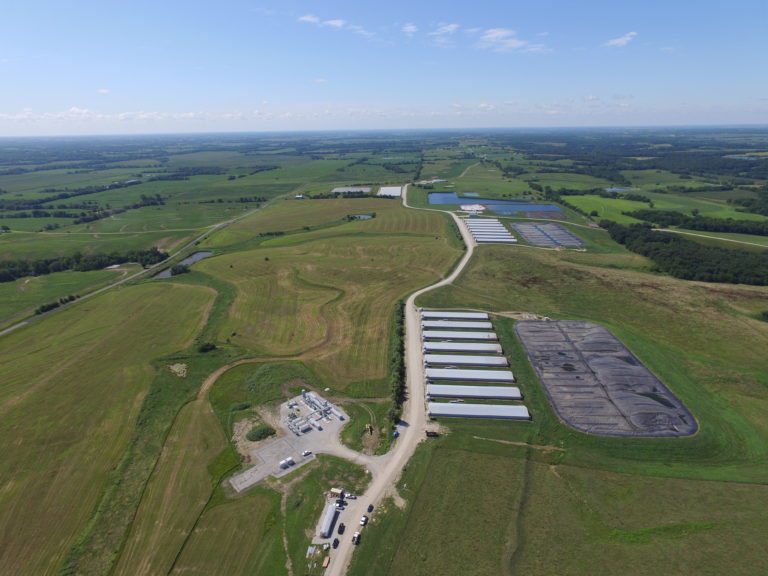
With the goal of giving farmers the opportunity to be in the energy market, RAE began working with Smithfield Hog Production of Missouri on their Northern Farms; this would be a $100 million renewable biogas project. The project centered on gathering hog manure into covered lagoons and capturing the methane gas released through the natural anaerobic digestion process. The captured gas would then travel through equipment for cleaning and compression in preparation of injection into the pipeline. RAE’s role as a developer in the project ranged from full engineering of the systems to fabrication and/or procurement of necessary process systems, progressing to project installation, commissioning and start-up.

Learn More

What Others Are Saying

Roeslein Alternative Energy’s WTE Project Begins RNG Production.

Roeslein Alternative Energy and Smithfield Hog Production celebrated the production of renewable natural gas (RNG) at the Ruckman farm site for delivery to the national pipeline from its large manure-to-energy project.

Read More

Roeslein Alternative Energy and Argonne National Laboratory Partnership

Huge amounts of organic waste are generated each year in the United States, creating a sizable market for technologies that can convert these wastes into usable products.

Read More

Project to Convert Manure Into Energy Celebrates Milestone

Roeslein Alternative Energy celebrated the completion of the first phase of its alternative energy project in northwest Missouri. This is the largest livestock manure to energy project in the United States.

Read More

Ecological Services

Respecting America’s natural grasslands can be as rewarding economically as it is spiritually when you are able to find the right balance of ecological benefits achieved from working with the land as opposed to around it. By working with farmers and landowners, Roeslein Alternative Energy incorporates wildlife, water quality, and carbon sequestration to create a system where the restoration of natural prairie grasses allows farmers to yield additional revenue from otherwise marginal land.

Through the harvesting of diverse prairie biomass for bioenergy applications, farmers and landowners see the economic benefits of biomass production as well as the savings earned through efficient use of the land’s water, nitrogen, and energy resources.

Why Prairie Grasses?

Without native plants and their deep roots, heavy rain quickly turns to run-off resulting in rapid rises in water levels, taking with it fertilizers used for farming and destroying natural habitats.

Who Benefits From Restored Prairies?

Native plants on the Missouri plains have been largely removed over the past 200 years and replaced with farmland, a practice that has had many serious and unforeseen consequences.

How Do Prairies Create a Working Ecosystem?

Members of The Missouri Prairie Foundation describe the benefits of native prairie grasses and their ecological services to the environment around them.

Making a Change for the Better

One of Roeslein Alternative Energy’s main missions is to restore and convert 30,000,000 acres of marginal land to native prairie grasses in just 30 years, it’s called the 30/30 Vision. This vision benefits farmers economically and positively impacts surrounding ecosystems by creating homes for various types of wildlife, providing erosion control, and preventing flooding. Currently, Roeslein Alternative Energy is undergoing multiple prairie restoration efforts with Smithfield Hog Production.

Dormant seeding of the Valley View prairie using native seed drills.

Established prairie at Valley View Farm in bloom.

What Others are Saying

Roeslein Alternative Energy, Smithfield Hog Production, and the Environmental Defense Fund brought together conservationists, food producers, scientists, educators, farmers, policymakers, and other interested members of the community to discuss the future of responsible land management on and around the Missouri Grand River Basin. Additionally, this conference was centered around providing market-based solutions that significantly improve water quality, soil erosion, nutrient losses, carbon sequestration, and soil health. Weren’t able to attend the conference or want a conference recap? Check out the Grand River Watershed Event Page.

Several initiatives have taken shape since this conference on May 17th, 2018. If you or your organization would like to be involved, learn more, have an idea you want to discuss or a project with a similar mission, please email us at [email protected].

Beyond the Asphalt: The Role of Prairies in Conserving Our Ecosystem

Those living in urban areas may not think about the importance of prairies, but beyond the asphalt, concrete, and glass of the city, once was a country rich in prairie grasses. However, these grasses are quickly fading. What is the importance of prairies and how do they affect our everyday lives?

Read More

A Road Map to Preventing Epic Flooding

A strategic reintroduction of native grasslands on just 10 percent of the Mississippi River watershed’s tributary landscape would significantly reduce flood levels. The potential positive impact is enormous with simultaneous benefits for the environment, wildlife, and renewable energy.

Read More

Cleaner Water by Restoring Perennial Warm-Season Grasses

Roughly one-third of Missouri was once completely covered by tall grass prairie, with root systems several feet long capable of absorbing and storing water deep in the soil. Roeslein Alternative Energy is working to strategically re-introduce native grasses and clean up the waters that affect all forms of the ecosystem.

Read More

Roeslein Farms

Roeslein Alternative Energy founder, Rudi Roeslein, has spent a decade restoring prairie grasses and natural habitats across his 2500 acres of farmland in Missouri. He has worked to not only benefit the natural ecosystem of the area but to also restore the habitat of flora and fauna to the area.

About Rudi Roeslein

Rudi Roeslein grew up in south St. Louis, after immigrating to America from Austria with his parents in 1956. He attended St. Louis University majoring in Engineering, and in 1990, put his degree to use by launching Roeslein & Associates. Today, Roeslein & Associates is a global engineering, modular fabrication, and construction company that is home to over 600+ employees with offices across the United States, United Kingdom, and China.

In 2010, Rudi Roeslein began to follow a different path – a path that was led by his true passion for wildlife and prairie restoratiIn 2011 he founded Roeslein Alternative Energy.

More recently, Roeslein has looked to his mentor, Dr. Peter Raven, President Emeritus of the Missouri Botanical Gardens, in regards to starting a new project. Over the course of the last several years, Roeslein has been working with the University of Missouri, the University of Minnesota, Iowa State University, Missouri Department of Conservation, Missouri Prairie Foundation, National Wild Turkey Federation, Missouri Department of Natural Resources and the U.S. Fish and Wildlife Service to brainstorm solutions to promote better farming techniques and better uses of what is classified as “marginal land,” land that doesn’t live up to current agricultural production standards. This team of workers from various industries is called the Midwest Conservation Biomass Alliance, or MCBA, and has provided critical guidance in the plant selection process, and prairie reconstruction design that Roeslein uses on his personal farmland.

All Systems Go

Industry Expert, Joel Thomas, Vice President of Manufacturing, from Pride Conveyance Systems gives his responses to questions on developments in the handling and conveying market in an interview with CanTech International Magazine.

(more…)